
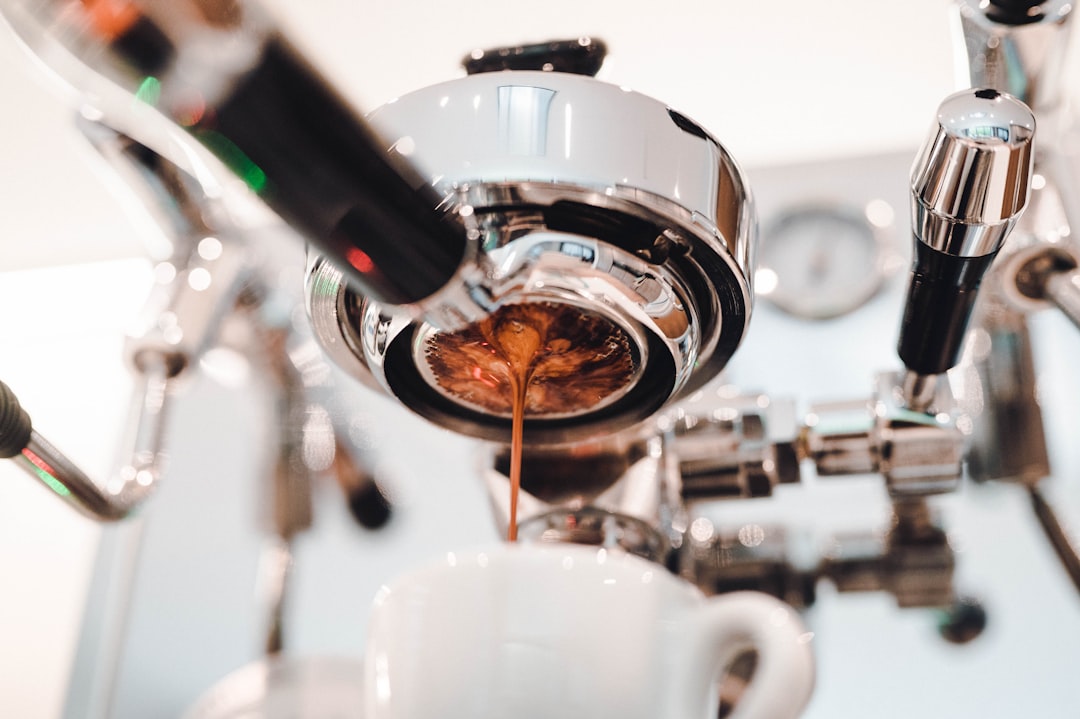
Discover why espresso machines are replacing drip coffee makers in American homes and what you need to know before making the switch.
The Shift Happening in American Kitchens Right Now
If you've walked through a kitchen appliance section recently, you've probably noticed something — drip coffee makers are quietly getting pushed to the back of the shelf. Espresso machines, once considered a specialty item for coffee enthusiasts with too much counter space and too much money, have become one of the fastest-growing appliance categories in US homes. And honestly, after seeing this shift in hundreds of service calls over the years, it's not surprising at all.
Homeowners aren't just chasing a trend here. They're responding to real frustrations with traditional drip machines — stale carafes, limited drink options, and machines that feel like they're halfway broken after 18 months. Espresso-based setups are stepping in to fill that gap, and for many households, they're filling it well.
What's Actually Driving the Switch
The biggest push comes from versatility. A decent espresso machine — even a semi-automatic model in the $300–$600 range — can produce espresso shots, steam milk for lattes, and essentially replicate what most people are ordering at coffee shops every morning. When you break down the math, a household spending $6 to $8 daily on café drinks can recoup the cost of a quality machine in a few months.
In many homes, we see the drip coffee maker sitting unused on the counter while the espresso machine becomes the daily driver. That's not an accident. People are realizing they want a cup of something specific — a flat white, a cappuccino, an Americano — not just a pot of generic coffee that's been sitting on a warming plate for 40 minutes.
The Pod Machine Phase — And Why People Move Past It
A lot of homeowners go through a middle step: the single-serve pod machine. It seems like the easy solution — no mess, no measuring, quick cup every morning. And for a year or two, it works fine. But here's what we see happen regularly: the novelty wears off, the cost of pods adds up fast, and the quality ceiling is pretty low. You can't make a real latte with a pod machine unless you're adding a separate frother, and at that point, you've already got a two-appliance setup anyway.
That realization is what sends most homeowners shopping for a proper espresso machine. The pod machine becomes the backup or gets donated, and something like a Breville Bambino, a De'Longhi Dedica, or a Gaggia Classic takes its place.
What People Get Wrong When They Make the Switch
The most common mistake I see is underestimating the grinder. People will spend $400 on a decent espresso machine and then try to run pre-ground coffee through it. Espresso is extremely sensitive to grind size — a variation of even a few seconds in extraction time can completely change the flavor profile. A burr grinder isn't optional if you want consistent results. Budget at least $100–$150 for a grinder, even if it means scaling back slightly on the machine itself.
The second mistake is skipping descaling. Espresso machines push water through at high pressure repeatedly, and mineral buildup is the number one cause of reduced performance and early failure. Most manufacturers recommend descaling every 2–3 months depending on water hardness. In hard-water areas — parts of the Southwest, Florida, Texas — that cycle might need to be closer to monthly. It's a 30-minute process that most homeowners ignore until the machine starts sputtering or throwing error codes.
A Real Example Worth Knowing
A homeowner in a suburb outside Phoenix called about an espresso machine that had "stopped working" after about eight months of use. It turned out the internal boiler had significant scale buildup — completely preventable with routine descaling


