
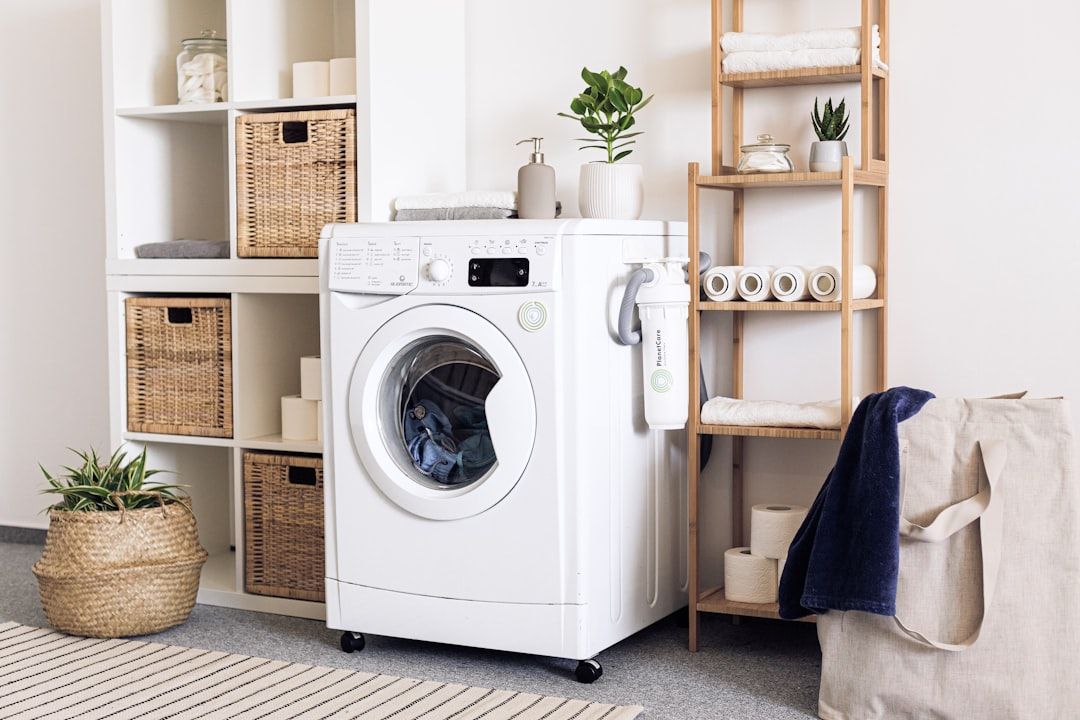
Your washer fills with water but won't start? Learn the most common causes and fixes from a technician's perspective to get your laundry moving again.
When Your Washer Fills Up and Just Sits There
Few things are more frustrating than loading up a full wash, hitting start, watching the tub fill with water — and then nothing. No agitation, no spinning, just a machine full of soggy clothes going absolutely nowhere. This is actually one of the more common service calls we get, and the good news is that in most cases, the fix is straightforward once you know what to look for.
The tricky part is that the machine seems to be working. It powers on, it fills, it might even hum. So homeowners often assume it's something complicated or expensive. In reality, this specific symptom — water fills but the cycle won't advance — usually points to a handful of very specific components.
The Lid Switch Is the First Thing to Check
On top-loading washers, the lid switch is probably the single most common reason a washer fills but refuses to move on. This small plastic switch sits just inside the machine's cabinet, near the door frame. When you close the lid, a small plastic tab or pin presses it down and signals the machine that it's safe to start moving water and spinning.
When that switch fails — and they do fail, often from repeated slamming or just normal wear — the machine's control board never gets the green light to proceed. It fills because the fill valve isn't controlled by the lid switch, but it won't agitate or spin because those functions are.
A quick test: open the lid and manually press the switch down with a pen while trying to start a cycle. If the washer suddenly jumps to life, you've found your problem. Replacement switches typically run between $10 and $30 and are easy to swap out with basic tools.
Real-Life Example: The "It Just Started Doing This" Call
A homeowner in the midwest called about her top-load Whirlpool doing exactly this — fills fine, stops dead. She'd had the machine for about seven years and had no other issues. When we looked at it, the lid switch tab had cracked almost completely through. She'd mentioned she'd been closing the lid pretty firmly because it hadn't been latching well lately. That's a classic pattern. The lid starts to sag slightly over time, people push it harder to close it, and eventually the switch takes too much impact and breaks. Replaced the switch in under 20 minutes, machine worked perfectly.
Motor Coupling and Drive Belt Issues
If the lid switch checks out fine, the next area to investigate is the drive system. On many top-loaders, a motor coupling connects the motor directly to the transmission. This coupling is actually designed to break under stress — it's a built-in fail-safe to protect the motor during overloads. Over time, especially in machines that frequently handle large loads, these couplings wear down and eventually snap.
In front-loaders or belt-driven top-loaders, a worn or broken drive belt can produce the same symptom. The motor runs, you might even hear it humming, but without a working belt or coupling, that energy never reaches the drum.
In many homes, we see this happen after someone washes something particularly heavy — rugs, comforters, or heavily soiled work clothes. The machine labors through a load or two and then the coupling gives out on the next cycle.
Control Board and Timer Faults
Less common but worth mentioning: a faulty timer or electronic control board can cause the cycle to stall right after filling. The machine completes the fill sequence and then the board fails to send the next signal. This is more common on older machines with mechanical timers that have worn contacts, or on newer digital machines that have had power surge exposure.
Before


