
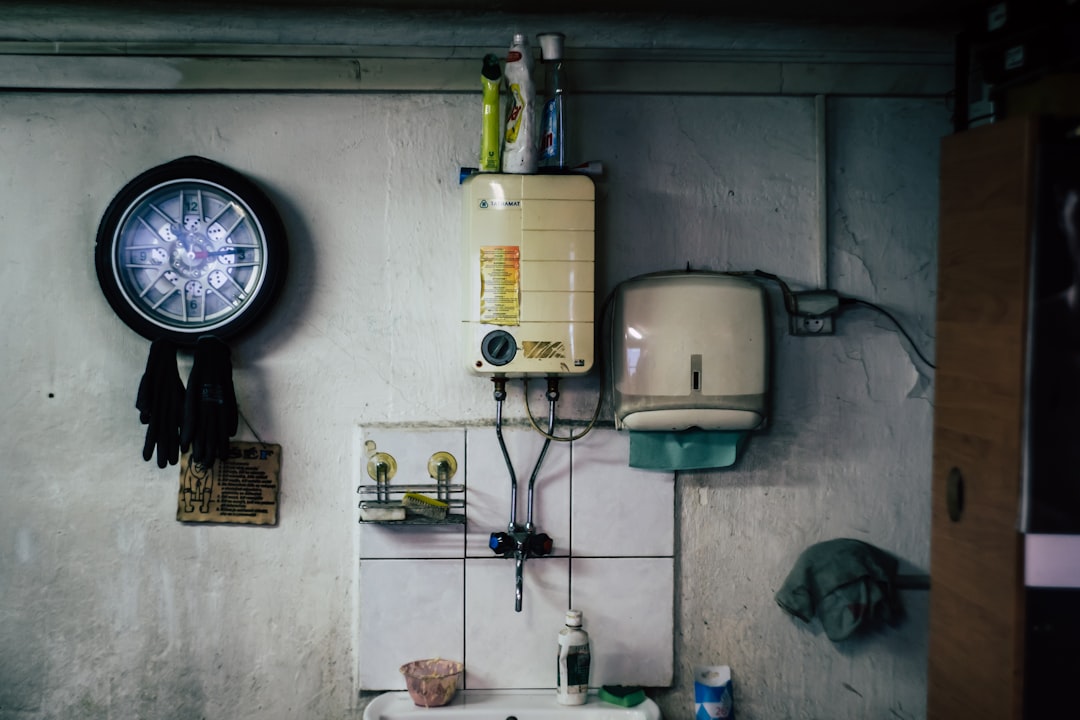
Is your tankless water heater not heating properly? Learn the real causes and fixes from a technician's perspective to restore hot water fast.
When Your Tankless Water Heater Lets You Down
You jump in the shower expecting hot water, and what you get instead is a lukewarm trickle — or worse, cold water that never warms up. It's frustrating, especially when you switched to a tankless system specifically to avoid this kind of thing. The good news is that most heating issues with tankless units are diagnosable and fixable without replacing the whole system. You just need to know where to look.
The Cold Water Sandwich Effect
One of the most common complaints we hear is what technicians call the "cold water sandwich." This happens when you turn on the hot water, get a brief burst of warm water left in the pipes from your last use, then a cold stretch, and finally hot water again. This is actually normal behavior for a tankless heater — it takes a few seconds to fire up and reach temperature. However, if that cold stretch lasts more than 30 seconds or the water never fully heats up, something else is going on.
Common Reasons a Tankless Heater Stops Heating Properly
1. Insufficient Gas Supply or Pressure
Gas-powered tankless heaters are high-demand appliances. A standard unit can pull 150,000 to 200,000 BTUs at full capacity. If your gas line isn't sized correctly or the pressure at the unit drops below the manufacturer's minimum — usually around 5 inches water column for natural gas — the burner won't fire at full power. In many homes, we see undersized gas lines that were fine for a traditional tank heater but simply can't keep up with a tankless unit's demand. If you've recently had other gas appliances added to your home, that could be starving your water heater.
2. Dirty or Clogged Inlet Filter Screen
There's a small mesh filter screen on the cold water inlet of nearly every tankless unit. Over time, sediment and debris collect there, restricting water flow below the minimum activation threshold — usually around 0.5 GPM. When flow drops too low, the unit simply won't fire. This is one of the most overlooked fixes out there. A homeowner in Denver once called us out for a "broken water heater" that turned out to be a filter screen so clogged with mineral buildup it was barely passing any water at all. A five-minute cleaning solved the entire problem.
3. Scale Buildup Inside the Heat Exchanger
Hard water is the enemy of tankless heaters. Calcium and magnesium deposits accumulate inside the heat exchanger over time, creating an insulating layer between the burner and the water. The unit works harder, heats less efficiently, and eventually struggles to reach your set temperature. If your water heater is more than two or three years old and has never been flushed with a descaling solution, this is very likely contributing to your problem. Annual maintenance using a vinegar flush or commercial descaler can extend the life of your unit significantly.
4. Error Codes You Shouldn't Ignore
Most modern tankless heaters — brands like Rinnai, Navien, and Rheem — display error codes when something's wrong. A code like "Error 11" on a Rinnai unit typically means ignition failure, while "Error 10" often points to an exhaust blockage. These codes are your fastest diagnostic tool. Check your unit's manual or look up the code online before calling a technician. You might find the fix is as simple as clearing a blocked vent pipe or resetting


