
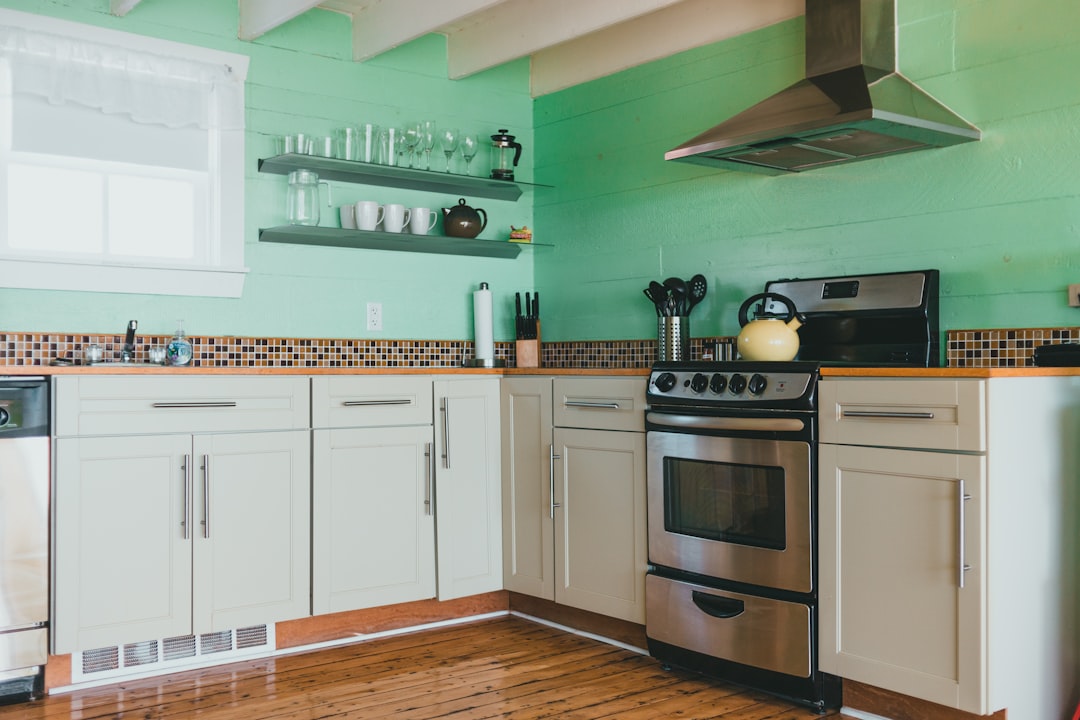
Is your oven burning food on one side? Learn the real causes of uneven oven heating and how to fix it fast with expert tips.
When One Side of the Oven Burns and the Other Barely Cooks
You pull out a batch of cookies and half of them are overdone while the other half look like they just got started. Or your roasted chicken comes out dry on one side and undercooked near the bone. If this sounds familiar, your oven has an uneven heating problem — and it's more common than most people realize. The good news is that in most cases, this is something you can diagnose and often fix without calling a technician right away.
What Actually Causes Uneven Heating
Most homeowners assume it's just a "hot spot" and start rotating their pans more often. That helps temporarily, but it doesn't solve the root cause. In many homes, we see one of three main culprits behind uneven oven heat: a failing bake element, a miscalibrated thermostat, or a damaged convection fan.
1. A Failing Bake or Broil Element
In electric ovens, the bake element sits along the bottom of the oven cavity. When it starts to fail, it won't glow red evenly across its entire length. You might notice one section that stays dark or a visible crack or blister on the element itself. A partially failed element produces heat in bursts rather than a steady, even temperature — which directly causes uneven cooking results.
Replacing a bake element is one of the more straightforward oven repairs. Most elements are held in place by two screws and a wire connector. The part itself usually costs between $20 and $60 depending on your oven brand. Before you do anything, make sure the oven is unplugged or the breaker is off. Always check your model number first — using the wrong element can create a bigger problem than the one you started with.
2. Thermostat Calibration Is Off
Here's something a lot of people overlook: ovens can drift out of calibration over time. Your oven might say 350°F but actually be running at 325°F or 375°F — and if the temperature sensor is slightly off on one side of the cavity, the heat distribution becomes uneven before the cycle even stabilizes.
A simple way to check this is with an oven thermometer. Place it in the center of the oven, set the temperature to 350°F, wait at least 20 minutes for it to fully preheat, and check the reading. If it's off by more than 25 degrees, your thermostat likely needs calibration or the temperature sensor probe needs to be replaced. Most modern ovens let you adjust the calibration setting directly through the control panel — check your owner's manual for the exact steps.
3. Convection Fan Problems
If you have a convection oven and you're seeing uneven results, the fan could be spinning too slowly, running intermittently, or not running at all. The whole point of convection is to circulate hot air so every part of the oven stays at a consistent temperature. A weak or failing fan motor completely defeats that purpose.
A good way to test this is to stand near the oven while it runs on convection mode. You should hear steady fan noise throughout the cycle. If it's cutting in and out or sounds labored, the motor is likely wearing out. In many homes, we see this issue appear in ovens that are 8 to 12 years old — it's a normal wear item, but it's often ignored until the problem becomes severe.
One Real-Life Example Worth Mentioning
A homeowner recently described a situation where her oven worked fine for everything except baking. Casseroles came out great, but every baked good came out uneven. After checking the


