
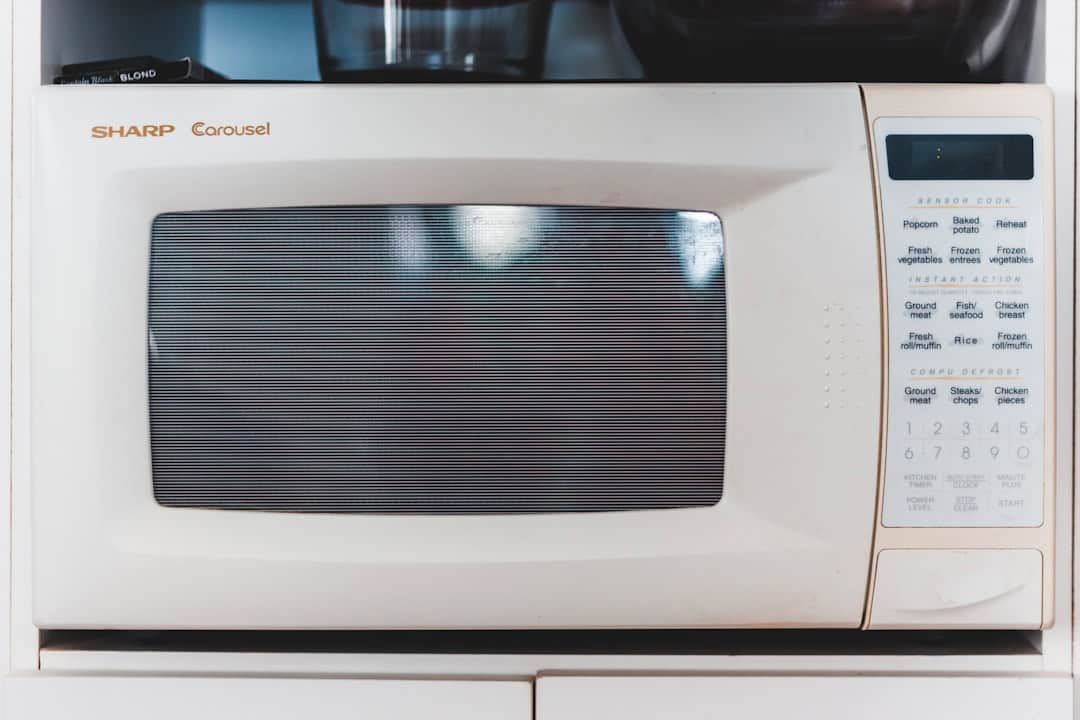
Is your microwave running but not heating food? Learn the most common causes and practical fixes to get it working again.
Microwave Stopped Heating? Here's Why and What to Do
You press start, the microwave hums, the light comes on, the turntable spins — but your food comes out cold. It's one of the more frustrating appliance problems because everything seems fine. The machine is clearly running. So what's going on?
A microwave that runs but doesn't heat is almost always caused by a failed internal component. The good news is that these failures follow a predictable pattern, and knowing what to look for can save you time and money — whether you decide to fix it yourself or call a technician.
How a Microwave Actually Heats Food
Before diving into what breaks, it helps to understand what's supposed to happen. A microwave heats food using electromagnetic waves produced by a component called a magnetron. The magnetron needs high voltage to operate — we're talking around 2,000 volts or more. That power is supplied through a system that includes a high-voltage capacitor, a diode, and a transformer.
If any one of these components fails, the microwave stops heating. The rest of the machine — the fan, the light, the turntable motor — can keep working fine because those parts run on standard household current.
Most Common Reasons a Microwave Stops Heating
1. Burned-Out Magnetron
The magnetron is the core heating component. Over time — especially in heavily used microwaves — it wears out. Signs of a failed magnetron include:
- Microwave runs but produces zero heat
- A burning smell when running
- Loud buzzing or humming sounds
Replacing a magnetron is possible, but the part itself can be expensive (sometimes $100–$200), and labor adds more. On older microwaves, it often makes more financial sense to replace the unit entirely.
2. Failed High-Voltage Diode
The diode converts AC power to DC power for the magnetron. When it fails, the magnetron doesn't get the power it needs. A bad diode is one of the more common — and more affordable — repairs.
Signs of a failed diode:
- No heat
- Loud humming noise while running
- Sometimes a burning smell
A diode typically costs $10–$20 and is a manageable replacement for someone comfortable working with appliance electronics.
> ⚠️ Safety note: Even when unplugged, the high-voltage capacitor in a microwave can hold a dangerous electrical charge. Never open the microwave cabinet unless you know how to safely discharge the capacitor first. This is not a standard DIY job.
3. Faulty High-Voltage Capacitor
The capacitor stores and releases electrical energy to power the magnetron. If it fails, the magnetron won't work. Testing a capacitor requires a multimeter and proper discharge procedure.
This is often a job for a qualified appliance repair technician unless you have hands-on experience with high-voltage components.
4. Defective Door Switches
Microwaves have two or three door interlock switches. These are safety mechanisms — the microwave is designed to not operate if the door isn't fully closed. But these switches can fail in a way where the microwave appears to run normally while the heating circuit stays disabled.
Check for this if:
- The microwave starts when you close the door
- Everything runs, but there's no heat
- You've noticed the door latch feels loose or doesn't click firmly
Door switches are inexpensive (usually under $15 each) and replacing them is one of the more accessible microwave repairs.
5. Burned-Out Thermal Fuse or Thermal Cutoff
Microwaves have thermal protection components that shut down the heating circuit if the unit overheats. If the microwave was run while empty, vented improperly, or experienced an internal fault, a thermal fuse may have blown.
A blown thermal fuse means the machine runs but won't heat. These fuses are not resettable — they need to be replaced. The part is cheap, but finding and replacing it requires disassembly.
6. Transformer Failure
The high-voltage transformer steps up household current to the level the magnetron needs. A failed transformer means no power


